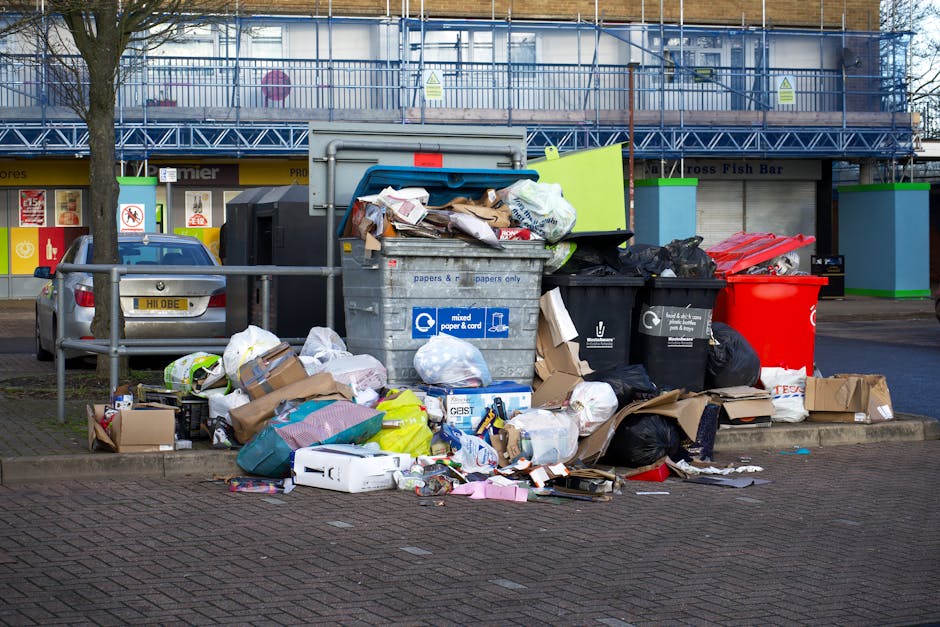
What to know about council bulky rubbish rules in London
If you have an old sofa leaning in the hallway, a broken wardrobe in the spare room, or a mattress that has definitely seen better days, council bulky rubbish rules in London can feel oddly complicated. One borough says book online, another wants a specific form, and a third has different limits depending on what you are throwing away. Bit of a maze, really.
This guide explains what bulky waste usually means, how London council collections tend to work, where people get caught out, and when a council collection makes sense versus a private bulky waste service. If you are trying to clear space without upsetting the neighbours or risking a refused pickup, you are in the right place.
In plain English: bulky waste is anything too large for your normal household bins, but the exact rules vary by borough. That is the key thing to understand from the start.
- Why council bulky rubbish rules matter
- How bulky waste collection works in London
- Key benefits and practical advantages
- Who this is for and when it makes sense
- Step-by-step guidance
- Expert tips for better results
- Common mistakes to avoid
- Tools, resources and recommendations
- Law, compliance, standards or best practice
- Options, methods, or comparison table
- Case study or real-world example
- Practical checklist
- Conclusion
- Frequently asked questions
Why What to know about council bulky rubbish rules in London Matters
London households generate all sorts of awkward items: beds, wardrobes, fridges, broken office chairs, garden furniture, and the occasional mystery object that has been "temporarily" stored for three years. Councils have to collect this waste in a controlled way, and they usually set their own conditions about what they will take, how much, where it must be left, and whether you need to book in advance.
That matters for three simple reasons. First, if you get it wrong, the collection may be refused. Second, leaving items out too early can lead to complaints, fines, or fly-tipping risk. Third, council bulky item services are often cheaper than people expect, but only if your item fits the rules. Otherwise, you could lose time and still end up needing another solution.
To be fair, most people only discover the rules when they are already standing in a cluttered front room thinking, "Right, where do I even start?" That is normal. The point here is to help you avoid guesswork and make the process smoother.
Expert summary: In London, bulky waste collection is usually straightforward in principle, but the detail is borough-specific. Check the exact council requirements before you move anything outside, and always separate items if the rules say they must be presented individually.
There is also a neighbourhood angle. On a narrow street in south London or a top-floor flat in a busy borough, timing and presentation matter even more. One badly placed sofa can block a shared entrance, cause friction with neighbours, and sit there in the rain looking sorry for itself until the scheduled pickup. Not ideal.
How What to know about council bulky rubbish rules in London Works
Most London councils operate a bulky waste or large-item collection service. The exact booking route, item limits, and collection day vary. Some councils let you book online, others may offer phone booking, and many distinguish between general bulky waste and special items such as fridges, mattresses, or electricals.
Typically, the process goes like this: you identify the items, check the council rules, book a slot, prepare the items for collection, and leave them in the agreed place before the collection window. Simple on paper. In practice, there are often small details that matter a lot.
For example, some councils only collect items from the kerbside or ground-floor frontage. Others require access through shared areas to remain clear. A few will not take dismantled items unless they are tied or bundled in a certain way. If you live in a flat, you may need permission from your managing agent or building to leave items in communal spaces even briefly. That part is easy to forget when you're focused on the old wardrobe with the wonky door.
Here is the general pattern you will notice across London boroughs:
- There may be a limit on the number of items per visit.
- Some items are charged separately.
- White goods and electricals may need special handling.
- Mattresses and upholstered furniture can have extra rules because of contamination and recycling concerns.
- Hazardous materials, DIY waste, and trade waste are commonly excluded.
If your local council does not fit your timing, or if the job includes a large amount of mixed waste, services such as bulky waste collection or a broader council rubbish collection style visit may be more practical than dragging item by item to a kerbside slot.
One more thing: booking lead times can vary. In busy periods, especially around end-of-tenancy dates, university moves, or pre-bank-holiday clear-outs, appointments can fill up quickly. If you wait until Friday afternoon and need the item gone by Monday morning, well... good luck. Better to plan a little earlier.
Key Benefits and Practical Advantages
For many households, council bulky waste collection offers the simplest route for a single large item or a small number of household goods. The biggest advantage is convenience. You do not need to hire a van, lift heavy furniture yourself, or figure out where a local reuse point is open.
There is also a cost advantage in many cases. Council services are often priced for basic domestic disposal rather than full-load clearance. If you only need to remove one bed frame, one sofa, or a couple of items from a spare room, that can be a sensible middle ground.
Other benefits include:
- Predictability: You know in advance what the council will take and where it should be left.
- Lower stress: The process is usually more straightforward than arranging a private clearance for one item.
- Local accountability: Borough services are designed for local residents and local waste streams.
- Reduced fly-tipping risk: Using the proper channel helps stop bulky items ending up on the pavement or in a back alley.
There is a practical side people sometimes overlook: proper bulk collections can also help you sort items for recycling or reuse. Some furniture, metals, and white goods are handled separately where possible. If sustainability matters to you - and in London, it usually should - that is a nice bonus.
For bigger clear-outs, you might want to compare council collection with broader disposal or clearance services such as waste clearance or furniture clearance if your bulky items are part of a larger room-by-room job.
Who This Is For and When It Makes Sense
This is mainly for householders, tenants, landlords, managing agents, and anyone responsible for getting rid of large domestic items in London. It is especially useful if you have just moved, are decorating, are clearing a relative's property, or are replacing big items like a sofa, mattress, fridge, or wardrobe.
It also makes sense for people with limited storage or restricted access. London flats can be awkward. Stairwells are narrow, lifts are small, and the nearest parking space may be two streets away. Sometimes the difference between a small council collection and a full private clearance is simply how much lifting and logistics are involved.
Here are some common situations where council bulky rubbish rules matter most:
- You are replacing furniture and want the old items removed responsibly.
- You have a one-off item too large for the bin store.
- You are clearing a rented property before check-out.
- You need to avoid leaving items outside for too long.
- You want a cheaper option for a modest amount of waste.
On the other hand, if you are clearing several rooms, a garage, a loft, or a probate property, council bulky collections may be too limited. In those cases, a more complete clearance approach can save time and back strain. No shame in that. Truth be told, a lot of people start with the council route and then realise they actually need a much bigger sweep.
Step-by-Step Guidance
Here is a practical way to handle bulky rubbish in London without wasting time.
- List the items clearly. Write down exactly what needs to go. A sofa and a sofa bed are not always treated the same. Neither are a washing machine and a fridge.
- Check your borough's rules. Councils differ on accepted items, maximum quantities, collection fees, and whether they collect from flats or only from ground-level access.
- Separate items that need special handling. Electricals, mattresses, fridges, and upholstered furniture may have specific requirements.
- Measure access points. If an item must pass through a narrow hallway or communal entrance, make sure it can actually be moved safely.
- Book the collection. Choose the available slot and note any instructions carefully. Save confirmation details if you can.
- Prepare the items. Remove loose contents, detach drawers if needed, and place everything where the council says it should go.
- Leave the area tidy. Keep walkways clear. If items are in a shared space, avoid blocking exits, bins, or bins stores. Obvious, but easy to forget in the rush.
- Check what happened after collection. If something was missed, contact the council promptly rather than leaving it outside for days.
If your collection includes mixed household waste, it may be worth combining the bulky item booking with a more general rubbish or waste removal option, depending on the exact rules. For example, a small flat clear-out may be better handled through flat clearance rather than several separate bulky item appointments.
Practical tip: take a photo of the items before the booked day. It helps if you need to confirm what was supposed to be collected, especially when the item count is close to the council's limit.
Expert Tips for Better Results
After seeing the same avoidable hiccups time and again, a few habits stand out.
1. Do not assume all large items are treated equally. A wooden bed frame, mattress, divan base, and headboard may each fall into different handling rules. Sounds fiddly, yes, but that is how it often works.
2. Book earlier than you think you need to. If you are moving out or expecting visitors, leave a margin. A missed slot can throw off a whole day.
3. Keep items dry and accessible. Rain-soaked cardboard, collapsed packaging, or a sofa hidden behind recycling bins can complicate collection and increase the chance of refusal.
4. Ask about reuse first. If the item is still usable, local reuse or donation routes may be better than disposal. Councils and clearance providers do not always inspect for quality in the same way, so if the item has life left in it, consider that route before dumping it.
5. Match the service to the job. One item? Council collection may work perfectly. Half a garage? Something more comprehensive is probably better.
6. Photograph the front of the property and the item placement. Small detail, big help if there is a dispute about access or missed collection.
7. Be careful with dangerous materials. Paints, chemicals, gas canisters, and certain DIY waste are often excluded. Do not tuck them in with other rubbish and hope for the best. Councils really do notice this sort of thing.
In our experience, the people who have the smoothest collection are the ones who prepare for the collection day as if it were a delivery. Clear route, clear instructions, clear space. Simple, but it works.
Common Mistakes to Avoid
The most common problem is booking before checking the borough's exact conditions. London is not one single system, and assuming it is can waste money and time.
Other frequent mistakes include:
- Leaving items out too early: This can create obstruction issues and may breach local instructions.
- Mixing prohibited items in with accepted waste: Hazardous or trade waste can cause the whole load to be rejected.
- Forgetting access constraints: Shared stairwells, gated estates, and basement flats need extra planning.
- Not checking item size or dismantling rules: Oversized items sometimes need to be broken down first.
- Missing the booking window: A missed collection can mean another wait and another fee.
- Choosing the wrong service: Council bulky waste is not always the best fit for multiple rooms or mixed clear-outs.
There is also a subtle one: people sometimes pile everything together and assume the council will sort it on the spot. Maybe, maybe not. If the instructions say items need separating, follow that. It reduces the chance of a refusal and makes the collection crews' work safer too.
Tools, Resources and Recommendations
You do not need fancy equipment, just a little organisation. A measuring tape, strong gloves, bags or ties for loose parts, and a phone camera are often enough to make the process easier.
Useful things to have ready:
- Measuring tape: Confirms whether the item can leave the property safely.
- Marker pen and labels: Handy if you are separating items by room or collection type.
- Basic tools: Screwdriver or Allen key for taking apart beds or flat-pack furniture.
- Heavy-duty gloves: Good for rough edges, broken fittings, or old fixtures.
- Phone photos: Useful proof of what was booked and where it was placed.
If you want to compare disposal routes, it helps to think in terms of scope. For a single mattress, a specialist option like mattress disposal may be more straightforward than trying to work around a general collection slot. For hard furniture, furniture disposal or sofa removal can be more direct.
And if your bulky waste includes heavy appliances, white goods, or mixed items, it can be worth checking whether a service such as white goods recycle fits the job better. The right choice depends on what you have, where you live, and how quickly it needs to go.
Law, Compliance, Standards, or Best Practice
Bulky rubbish collection sits inside a broader UK waste framework, but the practical rules you deal with day to day are usually set by your borough council and by general waste-handling expectations. The main point is simple: do not place waste out in a way that causes obstruction, nuisance, or unsafe handling.
Best practice usually includes:
- following the council's booking and presentation instructions exactly;
- not putting out waste too early;
- keeping communal areas, pavements, and fire exits clear;
- separating hazardous or prohibited materials;
- using a licensed, reputable collector if the council option does not suit the job.
For landlords, letting agents, and managing agents, there is an extra duty of care around communal spaces and tenant waste. Leaving bulky items in shared areas without permission can create access and safety issues. If a clearance is part of a property handover, it is sensible to check the building rules first, not afterwards.
It is also good practice to keep a record of what was removed, especially in tenant changeovers, probate clearances, or business premises where multiple people handle disposal decisions. A few photos and a booking reference can save a lot of back-and-forth later.
Where you are dealing with larger or more sensitive clearances, pages such as insurance and safety and health and safety policy can help set expectations about responsible handling, even when the collection itself is straightforward.
Options, Methods, or Comparison Table
There are usually three realistic choices for bulky rubbish in London: council collection, private bulky waste removal, or a broader clearance service. The best one depends on volume, access, urgency, and item type.
| Option | Best for | Pros | Watch-outs |
|---|---|---|---|
| Council bulky waste collection | One to a few large household items | Often cost-effective; familiar local process | Item limits, borough-specific rules, possible waiting times |
| Private bulky waste service | Fast, flexible removal of selected large items | More flexible timing and access handling | Usually costs more than a basic council booking |
| Full clearance service | Multiple rooms, mixed waste, estate or probate jobs | Handles more in one visit; less hassle | May be more than you need for a single item |
If you only have one large item, keep it simple. If the job is spreading across a room or two, the broader option often saves time in the end. There is no prize for making it harder than it needs to be.
For more mixed household clearances, useful related services include rubbish removal, house clearance, and home clearance, depending on how much needs to go.
Case Study or Real-World Example
Consider a fairly typical London scenario. A couple in a second-floor flat in west London wants to get rid of an old three-seat sofa, a broken coffee table, and a mattress before new furniture arrives. They first check their borough rules and find the council will collect bulky items, but the sofa and mattress need to be booked separately, and the collection point has to be outside the property on the agreed day.
At first, they assume they can leave everything in the communal entrance the night before. That would have been a mistake. The building manager does not allow clutter in shared access areas, and there is only one narrow stairwell. Instead, they measure the route, dismantle the table, wrap the mattress if required by the council instructions, and place the items neatly at ground level on collection morning.
The result is uneventful, which is exactly what you want. No complaints, no last-minute scramble, no awkward note from the neighbour with the pushchair. The whole thing feels boring. That is actually a win.
Now compare that with a different case: a family clearing out a garage after years of storing broken toys, a tired armchair, garden clutter, and a dead freezer. That job is much less suited to a single bulky item booking. A broader clearance would likely be faster, cleaner, and less stressful than trying to squeeze several categories into one council slot.
The lesson is simple. Match the disposal route to the volume and type of waste, not just the headline price.
Practical Checklist
Before your bulky rubbish collection day, run through this quick checklist.
- Have I checked my exact borough's bulky waste rules?
- Do I know which items are accepted and which are excluded?
- Have I confirmed whether items need to be separated or dismantled?
- Have I booked a time and saved the confirmation?
- Is the collection point clear and accessible?
- Have I removed loose contents, batteries, or hazardous extras?
- Have I checked whether my building or landlord has any access rules?
- Have I avoided leaving the items out too early?
- Do I have photos of the items in case I need them later?
- Is the chosen service right for the amount of waste I actually have?
If you can tick most of those off, you are in good shape. Small preparation, big difference.
Get a free quote today and see how much you can save.
Conclusion
What to know about council bulky rubbish rules in London comes down to a few practical truths: boroughs differ, item limits matter, access matters, and planning matters more than most people expect. If you check the rules first and prepare the items properly, council collection can be a tidy, sensible way to deal with bulky household waste.
But if your job is bigger, more urgent, or mixed with furniture, appliances, and leftover clutter from a bigger clear-out, a broader disposal option may suit you better. The right choice is the one that saves time, avoids hassle, and keeps everything compliant.
Either way, you do not have to wing it. A little structure goes a long way, and once the bulky item is finally gone, the room feels lighter in a way that is hard to describe until you experience it. Properly nice, actually.
Frequently Asked Questions
What counts as bulky rubbish in London?
Bulky rubbish usually means household items too large for normal bins, such as sofas, beds, wardrobes, mattresses, and some appliances. Each council may define and handle items slightly differently, so it is worth checking the local rules before booking.
Do all London councils offer bulky waste collection?
Most do, but the service level, price, and booking process vary by borough. Some councils allow online booking only, while others offer several routes. The key is to check your own borough rather than assuming the same system applies across London.
Can I leave bulky items outside the night before collection?
Usually not unless your council specifically says it is allowed. Leaving items out too early can create obstruction or nuisance issues and may increase the chance of a missed or refused collection. It is safer to follow the exact time instructions.
Will the council take my mattress or sofa?
Often yes, but these items can have special handling rules. Upholstered furniture and mattresses may need to be booked as separate items or presented in a certain way. Always check the council guidance before putting them out.
What happens if my item is too big for the council service?
If the item exceeds the council's limits or the access is too difficult, you may need a private bulky waste or clearance service. That can be the simpler option for oversized furniture, multiple items, or awkward flats and basements.
Is council bulky waste collection cheaper than private removal?
Often yes for one or a few items, especially if you are already within the council's rules. But if you have several items, difficult access, or a tight deadline, a private service may be better value because it saves time and multiple bookings.
Can I mix garden waste, DIY waste, and furniture together?
Usually not. Councils often separate bulky household waste from garden or DIY waste, and some items may be excluded completely. Mixing different waste types can cause the collection to be refused, so keep the load category clear.
What should I do with a fridge or freezer?
Fridges and freezers often need special handling because of their refrigerant and electrical components. Many councils and waste services treat them as a separate category, so check the instructions carefully rather than assuming they are handled like ordinary furniture.
Do I need to dismantle furniture before collection?
Sometimes, yes. Flat-pack items, large bed frames, or bulky wardrobes may need to be broken down for safe handling. Dismantling can also help if the item must pass through a narrow stairwell or doorway.
What if the council misses my collection?
If your item was presented correctly and the collection was missed, contact the council as soon as possible with your booking details and any photos you have. Delays can happen, and quick follow-up usually gives you the best chance of resolving it without starting again.
Can landlords book bulky rubbish collection for tenants?
Yes, in many cases, but the booking process and payment responsibility depend on the arrangement and the council's rules. Landlords and agents should also check access permissions for communal areas and confirm what must be removed before a tenancy ends.
When is a full clearance better than a council collection?
If you have several rooms of items, mixed household waste, a garage full of clutter, or a probate property to clear, a full clearance is often the better option. Council bulky collection is best for a small number of large items, not a whole-house job.